| February news from Metro’s Housing Department
|
|
| Street outreach: The frontlines of homeless services
Amanda’s day starts at Project Homeless Connect’s Access Center near downtown Hillsboro. As Outreach Manager for the organization, she spends most of her time in the community, connecting with people who are living outside.
“It’s just consistency and being kind and showing that you care,” Amanda said in an interview with Metro staff. Being patient and building trust over time means that one day, when that person is ready, they can take that next step into shelter or housing. “[It] feels really good once we get them to take the first baby step…and then eventually they’re all in.”
Watch this video to learn more about Amanda and the Project Homeless Connect outreach team, or read the article on Metro News.
|
|
 |
| Amanda has lived experience of homelessness. She approaches each day with empathy, calling the people experiencing homeless that she encounters “friends.” |
|
| Shari’s story: Building community at Renaissance Commons
When Shari’s marriage ended after eight years, everything changed. Not only was she faced with heartbreak, but also with the stark reality of Portland’s housing affordability crisis. The third-generation Portlander had been living comfortably in a three-bedroom home, but with her husband out of the picture, she could not keep up with rent. As the months passed, she faced three eviction processes.
On the day of Shari’s final payment deadline, Shari walked into the Urban League of Portland for help. Eventually, Urban League covered Shari’s back rent so she could avoid having an eviction on her record and helped her find a new place to live.
Over time, Shari’s grief turned into excitement for the possibilities ahead. Before moving into her new home, she enrolled in Rent Well, a free program designed to help renters find and maintain housing stability.
“I got the keys to my new place, and I was excited,” Shari says.
Through SHS-funded rent assistance, Shari moved into a studio apartment at Renaissance Commons.
|
|
 |
|
A long-time resident of North and Northeast Portland, Shari found her new apartment with the support of Urban League.
|
|
| For Shari, the real transformation went beyond four walls. After a short while she started to enjoy the experience of living in an apartment community, alongside neighbors who have deep connections to the area.
Shari continues to embrace community life in North Portland, making friends, building connections, and even hosting gatherings for her church family at her building. She attends services regularly and looks for ways to help her neighbors, turning her own experience of finding support into a source of hope for others.
Stable housing has become more than shelter—it’s a foundation for belonging, healing and giving back.
|
|
| Thank you, Tri-County Planning Body
On January 14, Metro convened the final Tri-County Planning Body (TCPB) meeting, before Metro launches the new Regional Policy and Oversight Committee as part of SHS reforms. The TCPB’s very last meeting was an opportunity for committee members to express gratitude, learnings and advice as Metro forms the new committee. The meeting ended early with a celebratory dinner and cake, and there was time for members and regional partners to spend time together and connect.
The TCPB completed its charge to create a regional plan, which was developed over time in chapters, in close collaboration between Metro and county partner staff. It was a significant undertaking for this committee to step into uncharted regional alignment territory, identify six prioritized goals for the region, and then approve an implementation plan and budget for each of those goals. This has set the foundation for some groundbreaking coordination work throughout greater Portland and across service sectors, particularly with health care partners. The TCPB has also raised complex and sometimes thorny policy issues, such as service provider compensation and retention, coordinated entry to housing programs and variances in workforce skills and capacity.
Although the TCPB’s work has concluded, the regional plan remains in effect, and goal area implementation work continues by Metro and county partners. The RPOC will determine the future of this regional policy work, building off the foundation laid by the TCPB and the regional plan.
Thank you to those who have made up the ecosystem of support for this committee over the past few years:
- Metro staff leading committee operations and deliverables, county partners for their collaboration
- Kearns + West for facilitating
- Community members who attended meetings and provided comment
- The TCPB co-chairs for their vision and leadership
- Most importantly, the TCPB members for their unwavering dedication, compassion and bravery to ask hard questions and engage in constructive dialogue
|
|
| Celebrating Black History Month: Albina Heirlooms preserves local histories of Black Portland
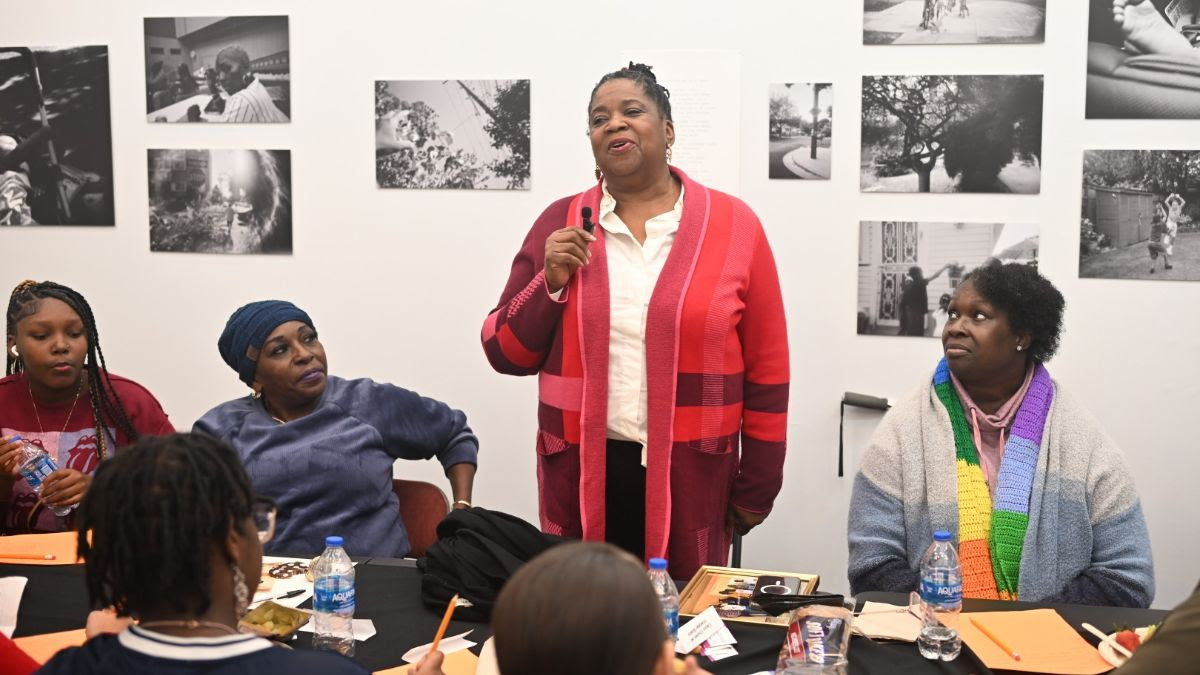
Earlier this month, artists from the “If We Could Talk” exhibit gathered at The Black Gallery to kick off Albina Heirlooms, a local storytelling and archival project.
Albina Heirlooms developed from a need to preserve Black micro-histories in North/Northeast Portland, and the project documents oral histories, personal memories, meaningful objects and lived experiences connected to place. The images and writing of “If We Could Talk,” captured by residents of the Dr. Darrell Millner Building, will be the first iteration of Albina Heirlooms.
|
|
| Top image: Lucretia Onick speaks at the Albina Heirlooms event; bottom image: Valencia Edwards showcases a photograph.
|
|
| Supportive housing services featured
Earlier this month, the regional supportive housing services fund was featured in The Oregonian. SHS is funded through a regional tax on high earners and businesses that Metro distributes to Multnomah, Washington and Clackamas counties for services. The Oregonian highlighted how the supportive housing services fund is helping thousands of people obtain and keep housing, even as homelessness increases.
Read the story here: Invisible wins: How $1.4 billion has transformed Portland area homeless services
|
|
| From the guide: “When disasters strike, the lowest-income survivors—including people of color, seniors, people with disabilities, people experiencing homelessness, and people with limited English proficiency—are often hardest hit but have the fewest resources and face the longest, steepest path to recovery.
The ‘Resources for Disaster Response, Recovery, and Resilience: A Toolkit for Advocates and Community-Based Organizations,’ is designed to arm organizations grappling with a disaster or preparing for a future disaster with information, enabling them to easily understand major issues that may arise during disaster recovery and respond effectively via advocacy.”
|
|
Get involved: upcoming meetings
The Supportive Housing Services Oversight Committee will meet on Monday, February 23 from 9:30 a.m. to 12 p.m. online.
The Affordable Housing Bond Oversight Committee will meet on Monday, March 9 from 3 to 5:30 p.m. online.
These meetings are open to the public and there is time for public comment during each meeting; check the meeting agenda a week ahead of the meeting date for details. Visit the links provided to sign up for public comment at the meeting or to submit a written comment. Public comment deadlines can be found on the meeting event pages.
You’ve received this email because you expressed interest in Metro’s housing work. If you no longer wish to receive updates, you can unsubscribe at any time.
If you are in immediate need of housing assistance, we encourage you to contact 211. Dial 211 toll free, text your zip code to 898211, or email help@211info.org.
|
|
|
|
|